

Fresh mushrooms contain a lot of water, and once harvested they continue to respire and gradually break down. The mushrooms you buy at the supermarket usually come in a closed or plastic-covered carton. The moisture released by the mushrooms becomes trapped inside. That creates a damp environment that produces a slippery or slimy surface.
A few things accelerate it:
- Condensation: Temperature changes during shipping, refrigeration, or the trip home cause water to condense inside the package.
- Poor ventilation: Plastic film holds humidity around the mushrooms. Once relative humidity gets very high, their surfaces stay wet.
- Natural deterioration: As mushroom cells age, their structure begins to break down and release moisture.
- Microbial growth: Bacteria and yeasts naturally present on mushrooms multiply much more rapidly on a wet surface. The slime is partly the result of this microbial activity and tissue breakdown.
- One wet mushroom affects the others: Mushrooms touching a deteriorating mushroom tend to become wet and deteriorate more quickly themselves.
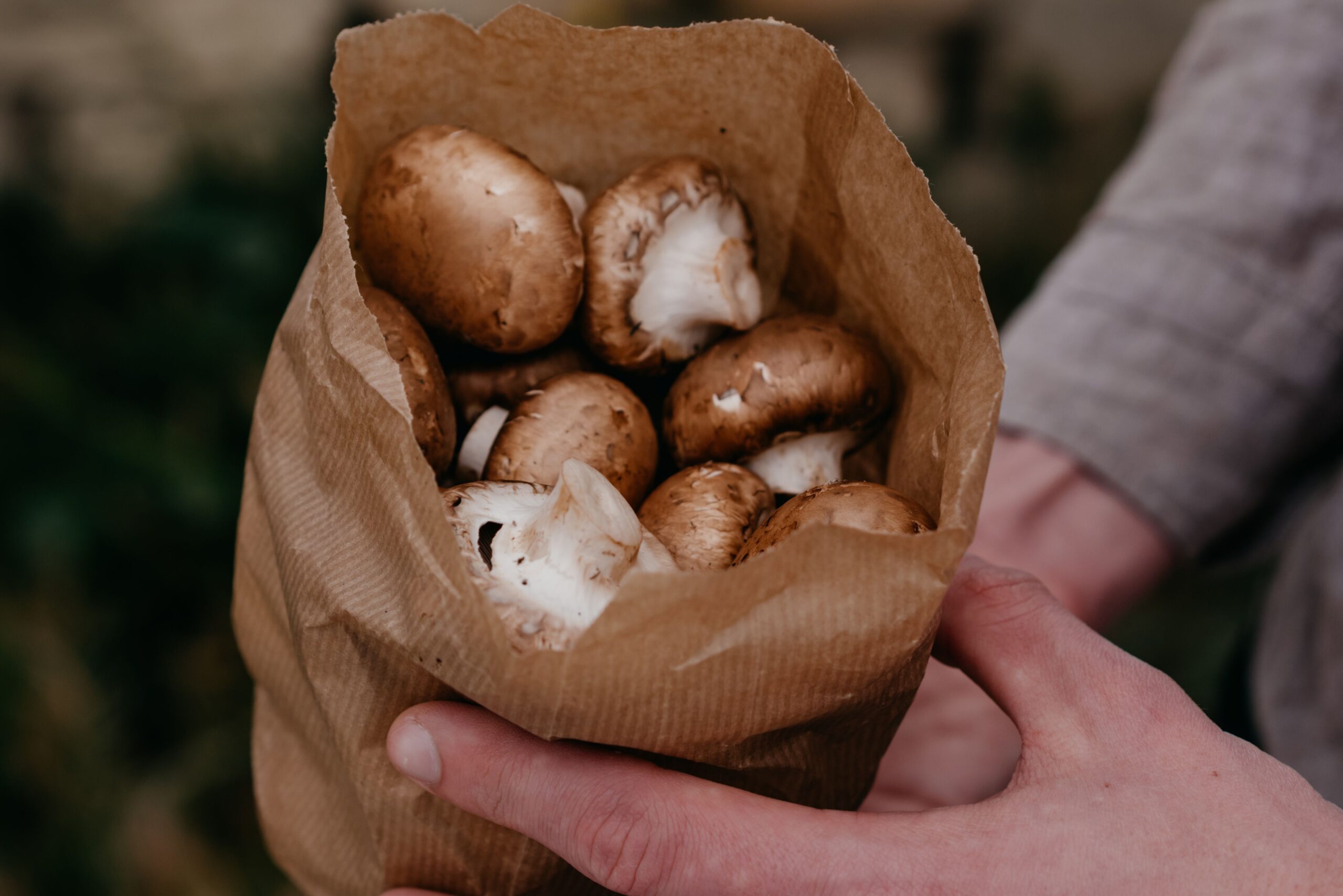
So what’s the best way to store mushrooms? A paper bag.
Take the mushrooms out of the plastic-covered carton and put them in a paper bag in the refrigerator, loosely folded over at the top. The paper absorbs excess moisture while still allowing some air exchange. Don’t wash the mushrooms before storing them; wash or wipe them just before cooking.
If you want to maximize shelf life further, put a dry paper towel in the bag with them. Replace it if it becomes damp.
Pantry by Clare has a “Vegetables (Fresh)” category but mushrooms are a good example of why you might want to add a category for specific food items: refrigerated mushrooms generally deteriorate considerably faster than many vegetables such as carrots, cabbage, celery, or peppers.